Showing posts with label oil. Show all posts

Sunday, March 1, 2009

Nigerian Militants Threaten to Sabotage Sahara Gas Pipe


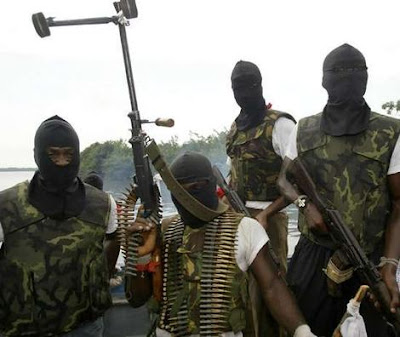
Seriously. What’s new? This is no different than anything we’ve heard before. “MEND Kidnaps Oil Workers;” “MEND Attacks [yet another] Oil Tank.” When will it end?

So the “new” issue in Nigeria in that MEND, Nigeria’s main militant group, has, yet again, threatened to sabotage yet another gas pipe. The only exception? This one’s on the Sahara. Oh, and the gas pipe? It’s worth of $13 billion.

The project is expected to pump Nigerian oil directly to Europe through a pipe under the Sahara Desert. Capital costs are an estimated $10 billion for the pipeline itself and $3 billion gathering centres. It’s expected to send up to 30 billion cubic meters of gas to Europe a year through a 2,580 mile pipeline from Nigeria to Niger and Algeria.

Russian gas monopoly Gazprom, France’s Total, and Anglo-Dutch energy giant Royal Dutch Shell are among the international firms to have expressed interest in participating in the project.

MEND has released a statement in an email saying “Those talking to the wrong people in Abuja about investing in the Trans-Sahara gas pipe project will be investing unwisely as we are determined to sabotage the project from inception.” MEND makes these threats habitually; it called off a ceasefire at the on 31 January, 2009 but, due to stepped up military involvement, it has not been able to make any significant strike against the oil industry.

But the latest statement from MEND undermines the notion that the pipeline could become a secure source of energy for Europe.

Well, I guess we’ll just have to wait and see what happens.

“Read More…”

This article reverts back to what we learn in class about Nigeria being a somewhat important source of the world oil supply; it already supplies 10 percent of the world supply, much of it to Europe and North America. Nigeria has an estimated 180 trillion cubic feet in natural gas reserves, the seventh largest in the world. So I term of energy supplies , the U.S. and Europe really need this oil and really don’t need militant groups like MEND ruining it for them.

“Grade This Post”

EU to Boost Aid

The EU recently announced that it will be increasing the amount of aid it sends to Nigeria from 450 million to 580 million euros. a senior European official said that the increase of cash is meant to support Nigeria's security forces as they combat armed groups, such as the Movement for the Emancipation of the Niger Delta (MEND), that are attempting to disrupt oil trade and industry. According to reports, the money will, for the first time, fund the training of Nigerian police and security forces opperating within Nigeria and abroad in places like Somalia as part of peacekeeping missions. The situation may present complications, however, as European citizens complain of sending money necessary for their own countries' recovery from the worldwide economic recession to a country notorious for rampant corruption and as armed groups like MEND threaten to attack the business interests of any country that interferes with the group's opperation.

Read more


This article demonstrates the interconnectedness of the modern political and economic world. Europe is willing to send millions of euros to an incredibly corrupt country that may not be able to account for how the money is used. European politicians must see something gain economically by making this move, and it is safe to assume that it has to do with oil. Whether this gamble pays off will become apparent in the coming years.

Grade this post

Friday, February 27, 2009

Helicopter Attacks In Niger Delta

This article is about a helicopter that was attacked by Nigerian gunmen in southern Nigeria. The helicopter, carrying 11 Italian oil company passengers, reached its destination safely with only one person injured in the attack. MEND (Movement for the Emancipation of the Niger Delta) was responsible for this. They warned the oil industry would target their helicopters in the future as well. MEND continually attacks oil facilities in the Niger Delta in order to get a portion of the oil resources. Gunboats are also being used as a form of defense and violence. These attacks have caused the Nigerian daily oil production to drop .6 million barrels in the past three years.


Read More.


This article relates to what we have been learning in class by what social factors affect the economy. Because there have been so many violent crimes, oil production, which is the main source of wealth in the Niger Delta region, has slowed tremendously. This results in a poor economy, and not allowing the region to prosper as much as it should. Militiant groups, like MEND, cause problems in trying to take oil for themselves, going to dramatic measures. The society is too selfish and can't function correctly to provide a safe and stable economy.

grade this post.

Sunday, February 15, 2009

Texas Company Fined for Bribing Nigerian Officials

Houston, Texas-based Halliburton Company, which until 2007 owned KBR (Kellogg, Brown, and Root) company, has been fined for bribing Nigerian oil officials. KBR wanted contracts in order to build a $6-billion gas liquefaction plant in the Niger Delta. This plant has been damaging to Nigeria’s economy in that it helps and supports major international oil companies to ship Nigerian crude oil out of the country for refining, which drops the profits that Africans could obtain for their valuable resource. KBR has yet to admit or deny this bribe. These alleged bribes occurred for an entire decade (1994-2004), during this time, KBR’s parent company, Halliburton was headed by Dick Cheney, who stepped down in 2000 to become vice president.

Nigeria relies heavily on its oil and gas-related resources which account for 87 percent of its foreign exchanges. Companies like KBR and the Houston oil companies are slowing and hurting the Nigerian economy but are not helping in any way; they are being selfish. Neither KBR nor most of Houston oil companies have provided any charitable services to help revitalize Nigerians, who have endured the foreign extraction of their local resource wealth.

Future political plans include Nigerian President Umaru Yar’Adua to supervise and control corrupt illegitimate robbery of public funds, and monitor the performance of multinational oil companies.


This article relates back to what we have been learning in class through economic challenges, political power, and international interests. The Nigerian economy is mainly based upon oil, and with international powers taking away it's one valuable natural resource, it doesn't allow African's to be profiting as much as they should. Reforms to fix this issue depends on the President to monitor the international companies that Nigeria works with in order to support economic revitalization.

Sunday, February 8, 2009

Gunmen free nine year old Nigerian boy


A nine year old boy was kidnapped and released by a gang in Nigeria's oil-producing Niger Delta. His eleven year old sister was killed in an atempt to protect her brother on their way to school last week. The two children's father was an employee of Royal Dutch Shell. Kidnapping is becoming increasingly common in the region, espeacially the kidnapping of oil workers. Emmanuel Awonusi, the boy who was kidnapped is said to have been released unharmed. The militant groups are trying to achieve a fairer distribution of oil wealth, and often times use deadly tactics to get their point across.


This article reveals social cleavages caused by economic tensions. The militant groups think that there is an unequal distribution of oil wealth and have in turn resorted to violence. This cleavage has caused many innocent lives to be taken and caused much strife within the region.


"Grade this Post"

Friday, January 30, 2009

Securing the Niger Delta


The Niger Delta, Africa's largest gas and oil industry, has been filled with violence over the past three years. This violence has caused a decrease in Nigeria's oil production by 20%. Rebels are fighting for a greater share of the country's oil network and are going as far as murder and kidnapping. Recently, the Nigerian military has cracked down on violence, and reduced most crimes. Kidnappings are becoming rare, and hopefully, all threats to the oil industry will soon be eliminated, bringing the oil infrastructure back to normal.

Read More…

In Nigeria, the outbreak of crimes is lessening, bringing the uncontrollable violence to a stop. Previous crimes have slowed down the economy of the oil industry. The tighter and stricter military enforcement should help ease the insecurities. The fight for a share of the country’s natural resources is coming to an end, reducing civil unrest throughout Nigeria.


grade this post.

Sunday, January 25, 2009

Distribution of Oil Income not Equal

Nigeria's income from oil revenue is huge. But much of that wealth does not reach the common people. This article features some of the groups that have come out on the losing end of this unequal arrangement - the Rumuekpe Youth Council, comprised of armed young people from the formerly-inhabited town of Rumuekpe, and the Rumuekpe Justice Fighters, a more organized group of men from the same town who relocated to Port Harcourt, the regional capital. Both groups agree that the four multi-national oil companies opperating in Rumuekpe did not invest in the community and are willing to react, an example of pressure from the bottom up, if revenue is not, in their opinion, distributed fairly. The oil producers argue that they are paying the rightful owners of the land they opperate on.
There is no question that oil has the potential to boost Nigeria's local economies. What is in question is the method of delegating these revenues. The Rumuekpe Justice Fighters claim that the current method of paying landowners divides the community against itself, a coinciding cleavage, and that the only way to peacefully repopulate Rumuekpe is to distribute funds directly to the community.

"Grade this post"