Showing posts with label kidnapping. Show all posts

Wednesday, April 15, 2009

Italian Hostage Freed

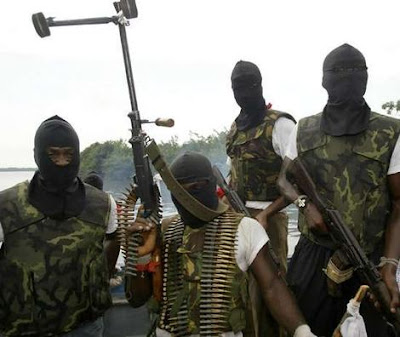
Nigerian rebels freed an Italian citizen who had been held captive for over a week in the state of Ebonyi, where such kidnappings - common in some states - are rare. According to the Italian government, Nigerian officials were able to forge some sort of settlement with the gunmen, and the affair ended "possitively." The man, Giuseppe Canova, said in a phone call to his mother in Italy that the gunmen had treated him well and that he is scheduled to return to Italy within the next few days. Canova was not a foreign oil worker; he was working for a construction company that had been contracted to build a compound for the Ebonyi state government.


This article demonstrates that the grave situation for foreigners in Nigeria is not limited to oil workers in the Niger delta. Armed groups appear to be attempting to expand their control and strike fear into overseas corporations. Although this crisis did not involve oil, the trade of that commodity is at the root of the rebellion. Until the Nigerian government, rebels, and foreign companies can agree on a way to share oil wealth, such attacks and kidnappings will continue.

Grade this post.

Sunday, February 15, 2009

Nigerians held in custody for kidnapping a Australian in Gambia


Gambian police have arrested six Nigerians accused of keeping an Austrialian man hostage; they had kept him tied up in a bathroom for more than a week after they had enticed him to Africa over the internet.

The gang had extorted about a $9,900 ransom from his family for his release.

The 71 year old man, Justin Liebig, was seized on the 1st of February 2009 and was only freed when his family had wired the money from Australia nine days later.

“The victim was tied to a chair in the toilet, with his mouth covered apparently to prevent him making any noise ... They threatened and forcefully obtained 5,000 euros from his family in Australia, while he was in custody," said Mr. Badjie, the Chief of the Gambian Police.

Sources said that the six Nigerians contacted Mr. Liebig on the internet and somehow convince the poor old man to do business with them in the small West African country. But that was not the case. They kidnapped him on his arrival and held him in Kololi, not far from the Gambia’s capital, Banjul.

Badjie said that this was the third incident of its kind involving none other than Nigerians. The suspects, if fully convicted, will be charged with conspiracy, kidnapping and obtaining money by false pretenses, Badjie said.

"We have different foreigners in the country but the Nigerians are the only people behaving in such a manner," he added.

Nigerian gangs, well Nigerians in general, have earned a pretty well known reputation for extorting money through the internet in what have come to be known as “419” confidence tricks; it’s named after the clause in Nigeria’s penal code that outlaws them.

“Read More…”

This article just goes to show how and why Nigerians in general have such a bad reputation. Incidents like these do not help improve the countries standing. How can you work with a country if they can’t even control or punish their people the right way? Nigeria’s problem is that there aren’t many consequences for breaking the law. The penal system, if you can call it that, is a system that revolves around bribery, not justice. Not in the least bit.


"Grade This Post..."

Sunday, February 8, 2009

Gunmen free nine year old Nigerian boy


A nine year old boy was kidnapped and released by a gang in Nigeria's oil-producing Niger Delta. His eleven year old sister was killed in an atempt to protect her brother on their way to school last week. The two children's father was an employee of Royal Dutch Shell. Kidnapping is becoming increasingly common in the region, espeacially the kidnapping of oil workers. Emmanuel Awonusi, the boy who was kidnapped is said to have been released unharmed. The militant groups are trying to achieve a fairer distribution of oil wealth, and often times use deadly tactics to get their point across.


This article reveals social cleavages caused by economic tensions. The militant groups think that there is an unequal distribution of oil wealth and have in turn resorted to violence. This cleavage has caused many innocent lives to be taken and caused much strife within the region.


"Grade this Post"